Introduction
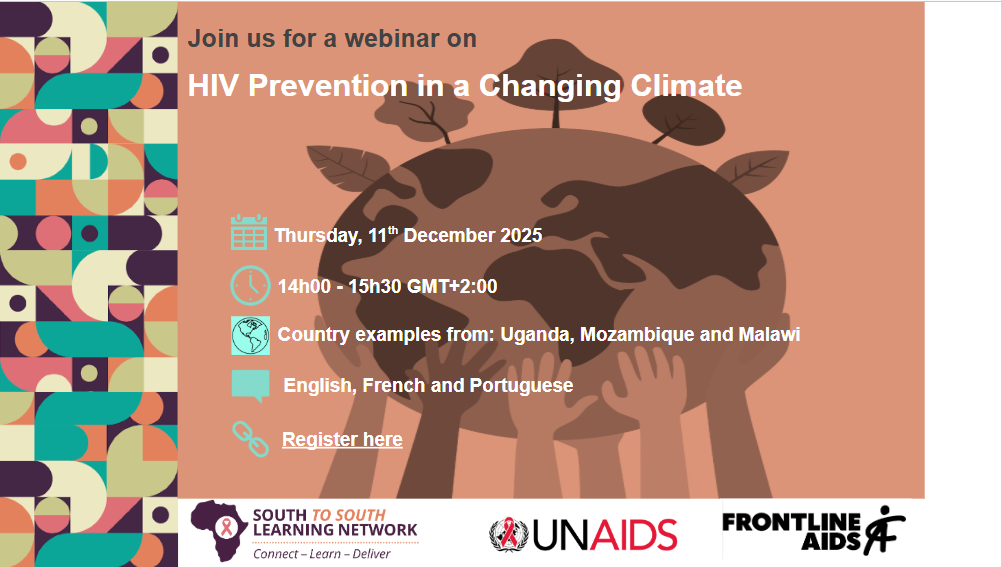
Climate change is emerging a critical threat to global health, with its pervasive impacts directly undermining the prevention and management of HIV. Extreme weather events, food insecurity and climate-driven displacement are no longer future threats. They are present-day realities that directly undermine the decades of progress in HIV prevention. Unique challenges emerge from the intersection between these two critical issues and profoundly influences stability of health systems, the continuity of antiretroviral therapy (ART), and the social determinants that influence vulnerability to HIV.
This webinar aims to explore practical strategies and successful examples of integrating climate adaptation into HIV prevention strategies, policies, funding and implementation mechanisms.
Objectives
- To understand the pathways through which climate change is disrupting HIV transmission, prevention, and care, with a focus on vulnerable communities and health systems.
- To learn from practical examples of how communities and health systems are building resilience and adapting HIV services to climate-related challenges.
- To identify concrete opportunities and actions to integrate climate adaptation into HIV prevention strategies, policies, and funding mechanisms.
Proceedings
The webinar began with a welcome and opening remarks by Adjoa Kwarteng (Genesis Analytics), who provided an overview of objectives, setting the stage for discussions on the evolving health landscape in Africa.
- Alison Wilson (Frontline AIDS) presented a framework linking climate change and HIV, emphasizing how environmental shifts impact health systems and prevention efforts.
- Marietta Wildt (UNAIDS) delivered a session titled “When Climate Shakes the System: HIV & SRHR in the El Niño Responses”, highlighting real-world implications of climate-related shocks on sexual and reproductive health.
- A panel discussion featured Dr. Pasquine Ogunsanya (AMS), Julio Mutemba (REPSSI), and Ishmael Phiri (Y+), sharing frontline experiences from organizations delivering HIV services under climate stressors. Discussions focused on practical challenges, innovative solutions, and lessons learned in supporting affected communities.
- The session concluded with a Q&A, closing remarks by Seonmi Choi (Global Fund), and a summary of key takeaways and next steps to advance climate-informed HIV prevention strategies.
Resources
The webinar recording and presentations can be accessed below!
Download Event Material