Introduction
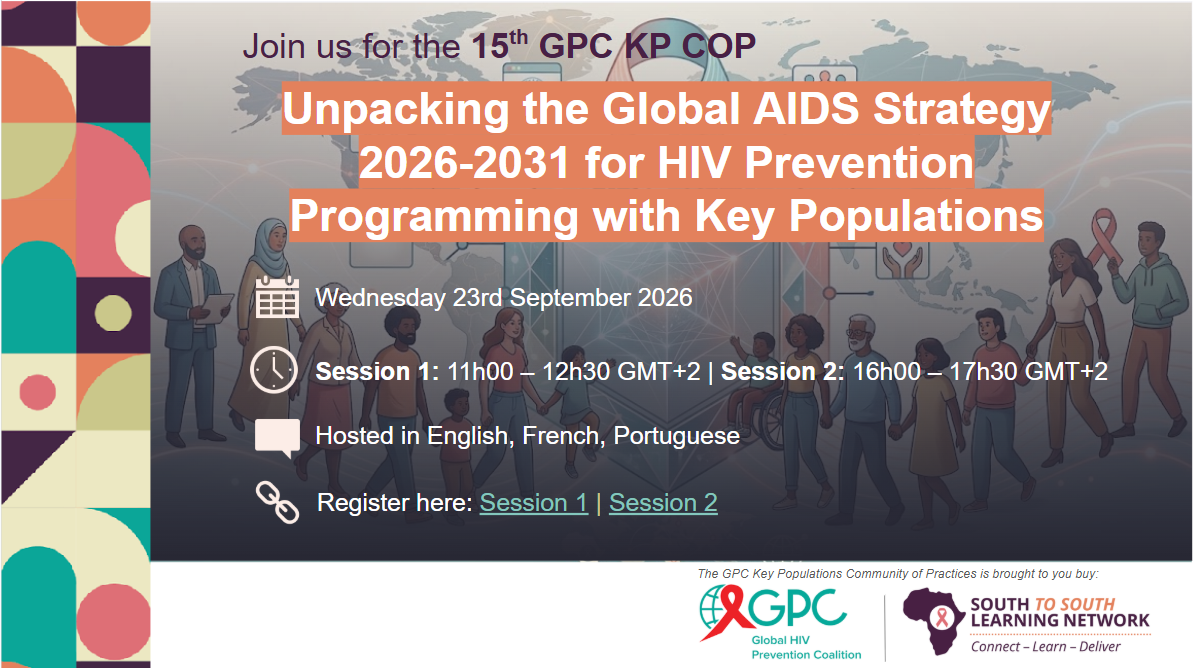
The 15th Key Populations Community of Practice (KP CoP) webinar, titled "Unpacking the Global AIDS Strategy 2026-2031 for HIV Prevention Programming with Key Populations," took place on September 23, 2026. To accommodate participants across global time zones, the webinar was delivered in two sessions; one in the morning and another in the afternoon. The Global HIV Prevention Coalition Plus (GPC+), UNAIDS, and the South-South Learning Network (SSLN) jointly hosted the event.
The overarching goals of the webinar were to share the new global targets under the Global AIDS Strategy 2026-2031 and the 2026 Political Declaration on HIV/AIDS, to deepen stakeholders' understanding of how to use these strategies as practical advocacy tools, and to identify collective actions to protect and sustain essential community-led services for key populations during periods of funding transition.
Key Highlights
- Opening and Framing: The sessions were opened by meeting chairs Heather-Marie Ann Schmidt (UNAIDS and WHO) in the morning and Anna Shapiro (NSWP) in the afternoon. They welcomed participants, outlined the webinar's objectives, and highlighted the significance of the new commitments for key population programmes.
- Global AIDS Strategy 2026-2031 and the 2026 Political Declaration: Cleiton Euzebio de Lima and Erick Mlanga from UNAIDS delivered a comprehensive overview of the new global commitments.
- They emphasized a major shift in the HIV response away from vertical, donor-led programmes toward country-owned, integrated, and community-led systems.
- They outlined the 2030 programmatic targets, including ensuring 95% of people in need of prevention are reached, alongside the 30-80-60 targets for community-led service delivery and societal enabler programmes.
- They delivered a core message that for key populations, integration and scale are only meaningful when services remain safe, voluntary, accessible, and free from discrimination and punitive laws.
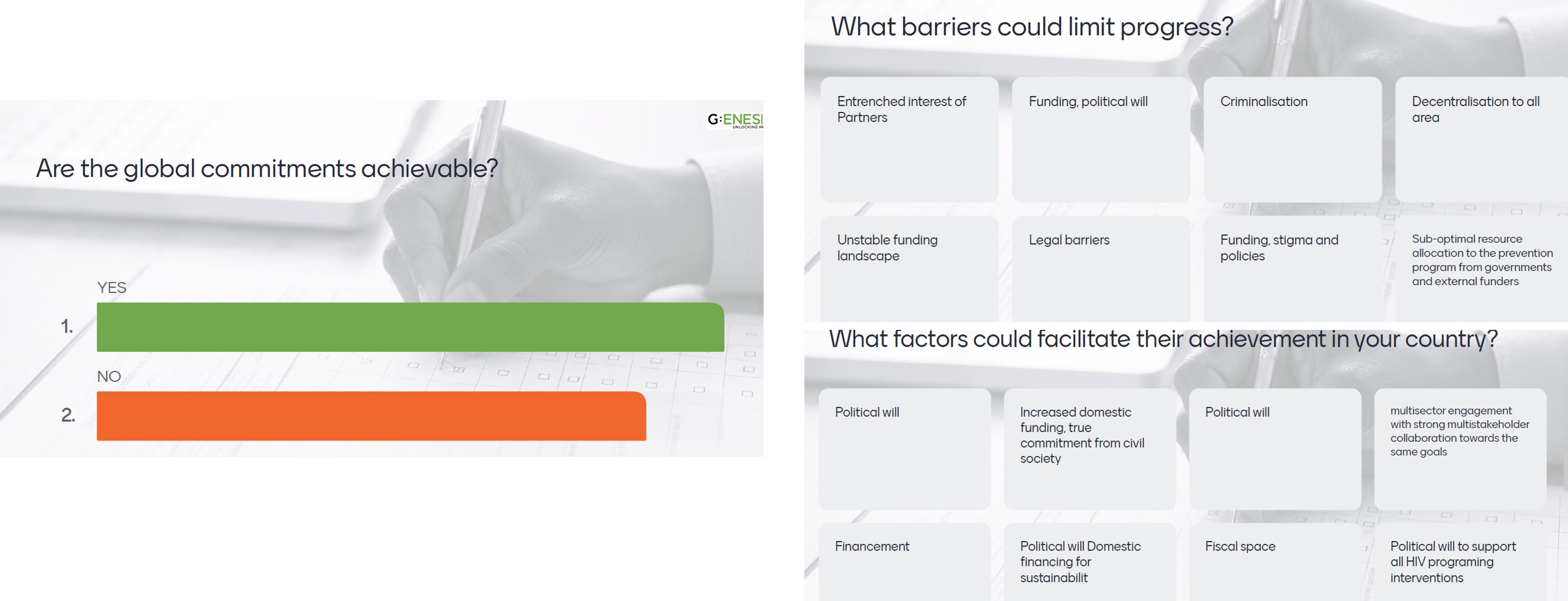
- Mentimeter Interaction: Facilitated by the session chairs, this interactive session captured audience feedback on the feasibility of the global commitments.
- Participants identified political will, domestic financing, funding, and community engagement as primary factors that could facilitate the achievement of targets in their countries.
- Conversely, stigma, discrimination, criminalising laws, and limited funding were highlighted as major barriers limiting progress.
Country and Constituency Presentations and Discussions:
The webinar also featured parallel breakout discussions focusing on the Strategy’s priorities, with practical experiences shared by various constituency groups. These discussions were facilitated by Heather-Marie Schmidt (UNAIDS), Parinita Bhattacharjee (SSLN), Michael Ighodaro (GBGMC) and Andriy Poshtaruk (UNFPA).
- Indonesia’s Transition and GC8 Strategy: Dr. Tiersa Vera Junita and Prof. Pande Putu Januraga shared insights on sustaining key population HIV prevention during Indonesia's transition phase.
- They detailed how Indonesia's GC8 strategy concentrates investments on restructuring prevention and closing the diagnosis gap in 144 priority districts.
- They highlighted the implementation of a Total Market Approach (TMA) and social contracting for community services to ensure that transitioning to domestic financing does not interrupt essential outreach and product access.
- Practical Priorities for Key Population Programmes: Erika Castellanos from Global Action for Trans Equality (GATE) discussed the priorities for community-led organisations. She stressed the urgent need for predictable funding that covers organisational costs, continuity of funding during donor transitions, and ensuring safe service integration that maintains peer support.
- She also shared practical resources from GATE, including a guide to the Global Fund's Grant Cycle 8 and toolkits for recognizing and addressing anti-gender opposition.
- Mozambique’s Approach to HIV Prevention: Antonio Timbana from the Conselho Nacional de Combate ao HIV/SIDA (CNCS) detailed how Mozambique translates global commitments into their national response. He explained how the 6th National Strategic Plan (PEN VI) aligns with the Global AIDS Strategy priorities and specifically targets key populations. Antonio further highlighted the focus on precision prevention, equitable access to new technologies like oral PrEP and Lenacapavir under GC8, and the strengthening of community-led monitoring initiatives.
- Delivering People-Focused Services: Gaye Mobauye Aubin Désiré from Alliance Côte d'Ivoire emphasised that simply having a service available does not mean true access has been achieved. He presented the concept that equity means providing what each specific person needs to access services effectively, rather than treating everyone identically (e.g., through differentiated hours, mobile services, and peer educators). Gaye reminded participants that dignity, confidentiality, and a lack of judgment are not optional supplements to HIV services, but fundamental components of quality
- Egessa John Joseph from The AIDS Support Organisation (TASO), Uganda and Carolyne Njoroge from the Kenya Sex Workers Alliance (KESWA) also shared how their constituencies are implementing the Strategy’s priorities, the challenges they are encountering and the practical approaches that may be adapted or replicated.
- These breakout rooms fostered agency and contributions leading to highly engaging conversation on navigating challenges and potential barriers to the strategy’s priorities.
Following the plenary session, participants completed the final mentimeter on what key lesson or action they will take forward in their country.
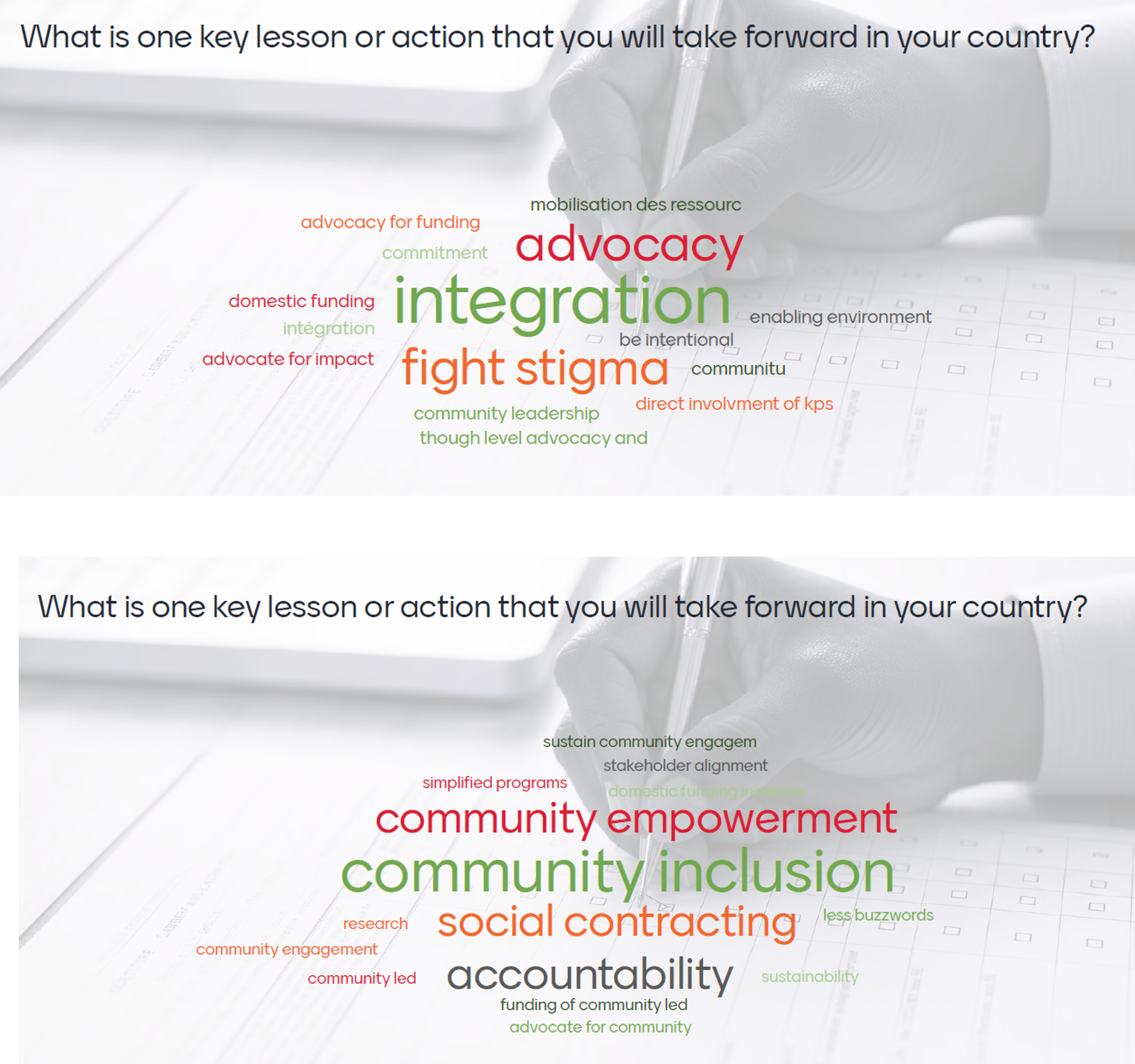
The key lesson attendees planned to take forward was the importance of community engagement, sustainability, and community-led accountability.
Closure / Call to Action:
The meeting chairs, Heather-Marie Ann Schmidt and Anna Shapiro, closed the sessions by summarising the identified actions and next steps. They reinforced the urgent need for collective action to protect and sustain essential community-led services during funding transitions. Ultimately, they noted that the true test of the 2026-2031 strategy is whether the response protects the people and programmes that are easiest to leave behind.
Download Event Materials
Access all materials from the 15th KP CoP below: